
Tao and traditional Chinese medicine: principles and treatments
Based largely on Taoism, traditional Chinese medicine dates back more than 2500 years. Let’s take a look at its key principles and characteristic remedies.


Tao’s place in Chinese medicine
Traditional Chinese medicine (TCM) is intrinsically guided by a principle called Tao (literally ‘way’ or ‘path’). Inherently unqualifiable and elusive, and constantly moving, it creates and brings to life all living things.
It is, of course, the principle behind Taoism, the major school of thought that emerged in the 1st century BC. To attain wisdom, Taoists must follow the natural laws of the universe. Life appears as a sequence of cycles of destruction and regeneration called ‘Movements’. As we’ll see later, this dimension has significantly influenced the Chinese approach to medicine.
Key principles of traditional Chinese medicine
The concepts of Chinese medicine were initially passed on verbally, the first written record being The Yellow Emperor’s Inner Classic. As the centuries passed and new anatomical discoveries were made, its founding principles became clearer, giving rise to an extremely rich and sophisticated practice (1).
Like Japanese kampo medicine, traditional Chinese medicine (TCM) - from which kampo takes its inspiration - adopts a holistic approach in which the individual is considered as a whole, rather than separating mind and body.
To support its practice, TCM draws on various philosophical concepts including Qi. This corresponds to an individual’s vital energy or life force, the free flow of which through the body’s meridians is evidence of good general health (2).
Embodied in the Tao symbol, Yin and Yang reflect the concept of duality. These two forces are not opposed but complementary and interact continuously in all aspects. Thus Yin represents femininity, the moon, darkness and cold, while Yang symbolises masculinity, the sun, light and heat. These two concepts are primarily involved in the work of energy-rebalancing(3).
The Five Movements Theory describes the dynamic processes that underlie each ‘cycle’ of life. These movements take their name from five elements: Wood, Fire, Metal, Water and Earth. They have the distinctive feature of being interdependent on each other, with a mutual relationship of generation and control. For example, Wood is generated by Water, it generates Fire, it controls Earth and is controlled by Metal.
How does this relate to Chinese medicine? This theory is transposed to human physiology, with each Movement corresponding to an organ (4). So the Liver is Wood, the Heart is Fire, the Spleen and Pancreas are Earth, the Lungs are Metal and the Kidneys are Water. This concept extends to organ spheres, vast areas of ‘affinity’ specific to each organ. A particular organ is thus associated with a season, a direction, an emotion and even a flavor (this varies depending on the school).
Practices and treatments of Chinese medicine
In light of these principles, TCM works to remove energy blockages and maintain a state of physical, mental and spiritual equilibrium. It acts as much to prevent as to cure.
It is built around 5 key pillars (5):
- phytotherapy: regarded as a national treasure, the Chinese pharmacopoeia contains more than 5000 substances, 200-600 of which are widely used today (6) ;
- Chinese dietetics: in Chinese medicine, good digestion supports the flow of Qi. Foods have their own Yin and Yang which affect energy balance (7) ;
- acupuncture: well-known in the West, this consists of inserting fine needles into subcutaneous tissue to stimulate certain meridian points and get Qi moving again (8). It is still used today for preventive and therapeutic purposes and to complement modern medicine. It can be combined with moxibustion (stimulation of energy points by applying a cone or stick of moxa (ground mug wort leaves)) to warm the blood (9) ; .
- Tui Na massage : considered a dynamic form of massage, this includes 300 distinct types of manipulation based on acupressure, rolling and energy exercises. Again, the aim is to rebalance Qi (10) ;
- energy exercises: these include Qi-Gong (focusing on breathing, relaxation and meditation) and Tai Chi, a martial art elevated to the rank of ‘health gymnastics’ (11-12).
The ‘stars’ of the Chinese pharmacopoeia
In Chinese medicine, plants are usually combined synergistically to maximise their respective actions. Observing their physical characteristics such as color, nature (warm, cold, neutral), taste, moisture level and mode of action (purifying, dispersing, invigorating or purging), provides information on their therapeutic profile. A patient’s pre-disposing factors also determine the choice of treatment.
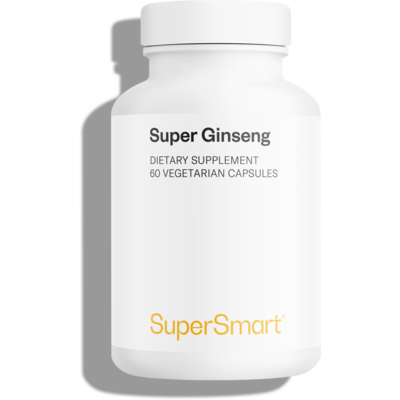
One of the best-known Chinese medicinal plants is Asian ginseng (to be found in the product Ginseng 30%). Long-considered a panacea, it was regarded as a general body-booster and source of vital energy, stimulating Yang (13). Today’s studies recognize its ability to fight fatigue, support immunity and maintain cognitive performance (14).
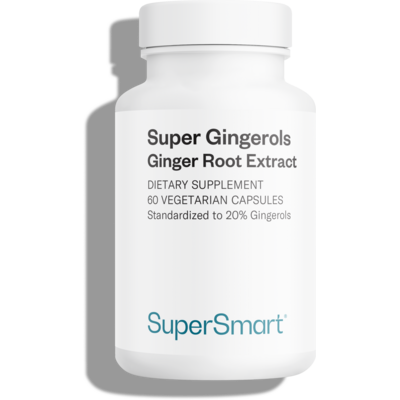
Dispelling cold from the stomach, ginger (available in the formulation Super Gingerols) was particularly coveted for maintaining digestive health, especially for the relief of nausea and vomiting (15). The purifying properties of Chinese watermelon (Dong Gua Pi) meanwhile, were used to cleanse the gut, decongest the lungs and soften the skin. By preventing Qi from stagnating, spicebush root (Wu Yao) was associated with supporting well-being in women and addressing kidney disfunction (17).
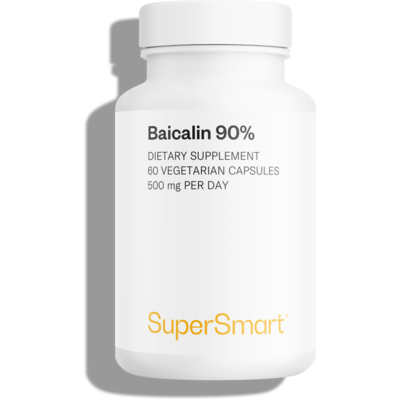
Listed for hundreds of years in the traditional Chinese pharmacopoeia, Baikal skullcap or Huang Chin (from which we get the active compound Baicalin), has a particular tropism for the liver, lungs and nervous system (18-19). Along with bupleurum root, pinellia, jujube, liquorice, ginseng and ginger, it features in the Chinese remedy Sho-Saiko-To, traditionally targeted at liver health.
SuperSmart ADVICE
References
- Marshall AC. Traditional Chinese Medicine and Clinical Pharmacology. Drug Discovery and Evaluation: Methods in Clinical Pharmacology. 2020 Mar 2:455–82. doi: 10.1007/978-3-319-68864-0_60. PMCID: PMC7356495.
- Flowers J. What is qi? Evid Based Complement Alternat Med. 2006 Dec;3(4):551-2. doi: 10.1093/ecam/nel074. Epub 2006 Oct 23. PMID: 17173121; PMCID: PMC1697751.
- Huang Y, Yao P, Leung KW, Wang H, Kong XP, Wang L, Dong TTX, Chen Y, Tsim KWK. The Yin-Yang Property of Chinese Medicinal Herbs Relates to Chemical Composition but Not Anti-Oxidative Activity: An Illustration Using Spleen-Meridian Herbs. Front Pharmacol. 2018 Nov 15;9:1304. doi: 10.3389/fphar.2018.01304. PMID: 30498446; PMCID: PMC6249273.
- Tang Q, Hao Y, Song J, Sun L, He J. Does the traditional Chinese medicine theory of five circuits and six qi improve treatment effectiveness? A systematic review of randomized controlled trials. Journal of Traditional Chinese Medical Sciences. 2018 Oct;5(4):350–60. doi: 10.1016/j.jtcms.2018.12.004. Epub 2018 Dec 17. PMCID: PMC7147195.
- Matos LC, Machado JP, Monteiro FJ, Greten HJ. Understanding Traditional Chinese Medicine Therapeutics: An Overview of the Basics and Clinical Applications. Healthcare (Basel). 2021 Mar 1;9(3):257. doi: 10.3390/healthcare9030257. PMID: 33804485; PMCID: PMC8000828.
- Ergil KV, Kramer EJ, Ng AT. Chinese herbal medicines. West J Med. 2002 Sep;176(4):275-9. PMID: 12208838; PMCID: PMC1071750.
- Lee MM, Shen JM. Dietary patterns using Traditional Chinese Medicine principles in epidemiological studies. Asia Pac J Clin Nutr. 2008;17 Suppl 1:79-81. PMID: 18296307.
- Van Hal M, Dydyk AM, Green MS. Acupuncture. [Updated 2022 Jul 25]. In: StatPearls [Internet]. Treasure Island (FL): StatPearls Publishing; 2022 Jan-. Available from: https://www.ncbi.nlm.nih.gov/books/NBK532287/
- Deng H, Shen X. The mechanism of moxibustion: ancient theory and modern research. Evid Based Complement Alternat Med. 2013;2013:379291. doi: 10.1155/2013/379291. Epub 2013 Sep 12. PMID: 24159344; PMCID: PMC3789413.
- Yang M, Feng Y, Pei H, Deng S, Wang M, Xiao X, Zheng H, Lai Z, Chen J, Li X, He X, Liang F. Effectiveness of Chinese massage therapy (Tui Na) for chronic low back pain: study protocol for a randomized controlled trial. 2014 Oct 29;15:418. doi: 10.1186/1745-6215-15-418. PMID: 25352050; PMCID: PMC4228121.
- Toneti BF, Barbosa RFM, Mano LY, Sawada LO, Oliveira IG, Sawada NO. Benefits of Qigong as an integrative and complementary practice for health: a systematic review. Rev Lat Am Enfermagem. 2020;28:e3317. doi: 10.1590/1518-8345.3718.3317. Epub 2020 Jul 15. PMID: 32696918; PMCID: PMC7365612.
- Pan X, Tian L, Yang F, Sun J, Li X, An N, Xing Y, Su X, Liu X, Liu C, Gao Y, Xing Y. Tai Chi as a Therapy of Traditional Chinese Medicine on Reducing Blood Pressure: A Systematic Review of Randomized Controlled Trials. Evid Based Complement Alternat Med. 2021 Sep 4;2021:4094325. doi: 10.1155/2021/4094325. PMID: 34527058; PMCID: PMC8437614.
- Wee JJ, Mee Park K, Chung AS. Biological Activities of Ginseng and Its Application to Human Health. In: Benzie IFF, Wachtel-Galor S, editors. Herbal Medicine: Biomolecular and Clinical Aspects. 2nd edition. Boca Raton (FL): CRC Press/Taylor & Francis; 2011. Chapter 8. Available from: https://www.ncbi.nlm.nih.gov/books/NBK92776/
- Kang S, Min H. Ginseng, the 'Immunity Boost': The Effects of Panax ginseng on Immune System. J Ginseng Res. 2012 Oct;36(4):354-68. doi: 10.5142/jgr.2012.36.4.354. PMID: 23717137; PMCID: PMC3659612.
- Zhang M, Zhao R, Wang D, Wang L, Zhang Q, Wei S, Lu F, Peng W, Wu C. Ginger (Zingiber officinale Rosc.) and its bioactive components are potential resources for health beneficial agents. Phytother Res. 2021 Feb;35(2):711-742. doi: 10.1002/ptr.6858. Epub 2020 Sep 20. PMID: 32954562.
- Islam MT, Quispe C, El-Kersh DM, Shill MC, Bhardwaj K, Bhardwaj P, Sharifi-Rad J, Martorell M, Hossain R, Al-Harrasi A, Al-Rawahi A, Butnariu M, Rotariu LS, Suleria HAR, Taheri Y, Docea AO, Calina D, Cho WC. A Literature-Based Update on Benincasa hispida (Thunb.) Cogn.: Traditional Uses, Nutraceutical, and Phytopharmacological Profiles. Oxid Med Cell Longev. 2021 Dec 10;2021:6349041. doi: 10.1155/2021/6349041. PMID: 34925698; PMCID: PMC8683187.
- Cai H, Wang J, Luo Y, Wang F, He G, Zhou G, Peng X. Lindera aggregata intervents adenine-induced chronic kidney disease by mediating metabolism and TGF-β/Smad signaling pathway. Biomed Pharmacother. 2021 Feb;134:111098. doi: 10.1016/j.biopha.2020.111098. Epub 2020 Dec 16. PMID: 33341058.
- Zhao T, Tang H, Xie L, Zheng Y, Ma Z, Sun Q, Li X. Scutellaria baicalensis Georgi. (Lamiaceae): a review of its traditional uses, botany, phytochemistry, pharmacology and toxicology. J Pharm Pharmacol. 2019 Sep;71(9):1353-1369. doi: 10.1111/jphp.13129. Epub 2019 Jun 24. PMID: 31236960.
- Limanaqi F, Biagioni F, Busceti CL, Polzella M, Fabrizi C, Fornai F. Potential Antidepressant Effects of Scutellaria baicalensis, Hericium erinaceus and Rhodiola rosea. Antioxidants (Basel). 2020 Mar 12;9(3):234. doi: 10.3390/antiox9030234. PMID: 32178272; PMCID: PMC7139475.
Keywords




4 Days
Found exactly what I was looking for…
Found exactly what I was looking for already made my first batch of yogurts all is working great! Shipping email notices letting me know tracking number, etc. all around a good deal
CROCKER John
4 Days
Good products and fair prices.
Good products and fair prices.
John Devere
10 Days
Excellent products.
Excellent products. Fast delivery and good customer’s service
BUISSON Laurence
14 Days
Very good product and fabulous service.
Very good product and fabulous service.
LUGO Luz
19 Days
Exceed expectations
Exceed expectations
GEORGE Verne
22 Days
Excellent product
Excellent product , exceptionally efficient process and no pushy sales . Transparency of product origin ,ingredients, quality & description evidence based . Information. User friendly website . easy membership , onboarding & off . EXCELLENT Prices no gimmicks Fast delivery & correct . So glad I found this company .
BEAVERS SANCHEZ Tencia
25 Days
Customer service is excellent.
Customer service is excellent.
Jill
26 Days
Product is wonderful
Product is wonderful. Praise The Lord!
DMHoge
29 Days
You guys have very good quality products
You guys have very good quality products
Mariano Castillo
30 Days
Awesome company.
Very fast shipping, great prices and excellent products.
Susan
33 Days
Best price and quantity of product
Best price and quantity of product Slow delivery though in age of Amazon, but understand cost of service.
CAMPBELL Clayton
34 Days
Exceed
Exceed expectations
GEORGE Verne
42 Days
Clean ingredients
Clean ingredients
chris bentley
45 Days
Above and Beyond!
Above and Beyond!
DOMINIC
57 Days
They get the product to me quickly.
They get the product to me quickly.
GORMLEY Rebecca