
Do pumpkin seeds help reduce cholesterol levels?
Pumpkin seeds are credited with many health benefits including reducing cholesterol levels. Is this actually the case?


What are pumpkin seeds?
Pumpkin seeds are small, highly-nutritious edible seeds obtained from pumpkins.
They are eaten roasted, chopped, ground, or ‘as they come’, as an appetizer, a snack, or in salads, soups or mixed dried fruit.
They are nutritionally significant because they have a high content of minerals and trace-elements (magnesium, zinc and iron), fibre, protein (30g per 100g), vitamins A and E, and unsaturated fatty acids.
Do pumpkin seeds have specific benefits in terms of reducing cholesterol levels?
Pumpkin seeds are associated with health benefits, including their potential for lowering levels of ‘bad’ cholesterol (1).
As a reminder, ‘bad’ or LDL cholesterol is a risk factor for cardiovascular disease because it can build up on artery walls and form atheromatous plaques which impair blood flow and increase the risk of heart problems and stroke.
Let’s take a look at pumpkin seeds’ 5 mechanisms of action on cholesterol:
Pumpkins seeds are high in fibre
Generally speaking, dietary fibre helps to reduce levels of LDL cholesterol.
To facilitate the digestion of fats, the gallbladder produces bile acids from blood cholesterol.
These cholesterol-laden acids are released into the gut during digestion, but are neutralised by dietary fibre which ‘traps’ them and prevents them from being reabsorbed by the body.
Instead, they end up being excreted in stools along with the fibre. The gallbladder is therefore forced to make new bile acids by drawing on blood cholesterol and thus the level of LDL-cholesterol in the blood is reduced (2).
An excellent source of magnesium
Pumpkin seeds’ high magnesium content (120mg for just 20g, or 30% of the RDA) is another of its weapons for combatting LDL.
Indeed, many studies suggest that magnesium reduces absorption of lipids in the gut, especially cholesterol, at mealtimes (3), and that it simultaneously raises levels of ‘good’ HDL cholesterol (4).
Phytosterols similar to human cholesterol
Pumpkin seeds contain phytosterols such as β-sitosterol, campesterol and stigmasterol (around 250mg per 100g).
These plant compounds are structurally similar to human cholesterol.
In the gut, this similarity is enough to reduce cholesterol absorption as the two compounds compete with each other during the formation of the micelles responsible for making them cross the intestinal barrier (5-6).
Pumpkin seeds: beneficial antioxidant properties?
These seeds are rich in antioxidants, such as vitamin E (2.2mg per 100g, or 18% of the RDA) and carotenoids (including lutein and zeaxanthin).
These substances are believed to protect the body against LDL oxidation. When cholesterol-transporters become oxidised, they are no longer recognised by the body and are instead consigned to phagocytosis, a protective process responsible for neutralising unwanted particles. They then form a deposit, which over time accumulates into plaques (this is termed ‘atherosclerosis’) which can end up blocking the arteries.
The antioxidant compounds in pumpkin seeds are thought to curb this process.
Unsaturated fatty acids and transport of LDL cholesterol
The polyunsaturated fatty acids in pumpkin seeds (which represent almost half their total fatty acids) are another ‘string to their bow’ in lowering cardiovascular risk.
These fatty acids, which cannot - unlike saturated ones - be produced by the body, appear to confer greater fluidity to cell membranes, the mechanism of action likely to be behind their potential benefits in respect of LDL (7).
This property may enable more LDL particles to be transported inside cells and thus reduce the amount of LDL cholesterol in the blood.
Combatting ‘bad’ cholesterol: important reminder
To conclude then, pumpkin seeds appear to have significant positive effects in terms of lowering ‘bad’ LDL cholesterol.
They cannot, however, be considered a ‘miracle cure’.
To control your blood cholesterol levels, you need to adopt a holistic approach that includes a balanced diet, a healthy lifestyle, regular exercise and if necessary, appropriate medication.
What’s the best way of consuming these seeds to maximise their effects on LDL cholesterol?
Because they are high in unsaturated fatty acids, shelled pumpkin seeds are very prone to rancidity.
To preserve their beneficial effects, it’s therefore best to keep them refrigerated, and consume them raw or dried, rather than roasted.
Pumpkin seed and other anti-cholesterol supplements
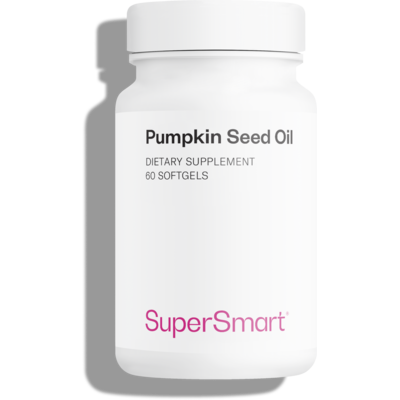
To help boost your intake easily and substantially, there are pumpkin seed oil dietary supplements (such as Pumpkin Seed Oil), which also support urinary health and function.
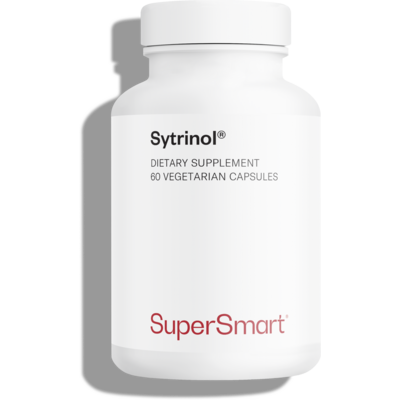
With regard to cardiovascular health, you could also take a black garlic supplement, known for its LDL-fighting properties (try, for example, Organic ABG10+®), or the patented supplement Sytrinol™, to support the liver, the site of cholesterol control.
SuperSmart ADVICE
References
- El-Mosallamy, A.E.M.K., Sleem, A.A., Abdel-Salam, O.M.E., Shaffie, N., Kenawy, S.A. (2012). Antihyperlipidemic effects of Cucurbita pepo L. in high-fat diet-induced hyperlipidemic rats. Journal of Medicinal Food, 15(5), 495-500.
- Brown, L., Rosner, B., Willett, W.W., Sacks, F.M. (1999). Cholesterol-lowering effects of dietary fiber: a meta-analysis. The American Journal of Clinical Nutrition, 69(1), 30-42.
- Effects of magnesium on postprandial serum lipid responses in healthy human subjects. Kishimoto Y, Tani M, et al. Br J Nutr. 2010 Feb;103(4):469-72. Epub 2009 Nov 27.
- Effects of oral magnesium supplementation on glycaemic control in Type 2 diabetes: a meta-analysis of randomized double-blind controlled trials. Song Y, He K, et al. Diabet Med. 2006 Oct;23(10):1050-6.
- Vergès, Les phytostérols : quels bénéfices ? quels risques ?, Doi : MMM-12-2009-3-6-1957-2557-101019-200908708
- Katan, M.B., Grundy, S.M., Jones, P., Law, M., Miettinen, T., Paoletti, R. (2003). Efficacy and safety of plant stanols and sterols in the management of blood cholesterol levels. Mayo Clinic Proceedings, 78(8), 965-978.
- Kuo P, Weinfeld M, Loscalzo J. Effect of membrane fatty acyl composition on LDL metabolism in Hep G2 hepatocytes. Biochemistry. 1990 Jul 17;29(28):6626-32. doi: 10.1021/bi00480a011. PMID: 2168736.
Keywords


4 Days
Found exactly what I was looking for…
Found exactly what I was looking for already made my first batch of yogurts all is working great! Shipping email notices letting me know tracking number, etc. all around a good deal
CROCKER John
4 Days
Good products and fair prices.
Good products and fair prices.
John Devere
10 Days
Excellent products.
Excellent products. Fast delivery and good customer’s service
BUISSON Laurence
14 Days
Very good product and fabulous service.
Very good product and fabulous service.
LUGO Luz
19 Days
Exceed expectations
Exceed expectations
GEORGE Verne
22 Days
Excellent product
Excellent product , exceptionally efficient process and no pushy sales . Transparency of product origin ,ingredients, quality & description evidence based . Information. User friendly website . easy membership , onboarding & off . EXCELLENT Prices no gimmicks Fast delivery & correct . So glad I found this company .
BEAVERS SANCHEZ Tencia
25 Days
Customer service is excellent.
Customer service is excellent.
Jill
26 Days
Product is wonderful
Product is wonderful. Praise The Lord!
DMHoge
29 Days
You guys have very good quality products
You guys have very good quality products
Mariano Castillo
30 Days
Awesome company.
Very fast shipping, great prices and excellent products.
Susan
33 Days
Best price and quantity of product
Best price and quantity of product Slow delivery though in age of Amazon, but understand cost of service.
CAMPBELL Clayton
34 Days
Exceed
Exceed expectations
GEORGE Verne
42 Days
Clean ingredients
Clean ingredients
chris bentley
45 Days
Above and Beyond!
Above and Beyond!
DOMINIC
56 Days
They get the product to me quickly.
They get the product to me quickly.
GORMLEY Rebecca