
Barbecues: how can you barbecue meat more healthily?
Sausages, burgers, kebabs … What better way of spending a warm, sunny day than a barbecue in the garden! But it doesn’t score quite so highly when it comes to health. Follow these simple recommendations for making your barbecue a healthier occasion.

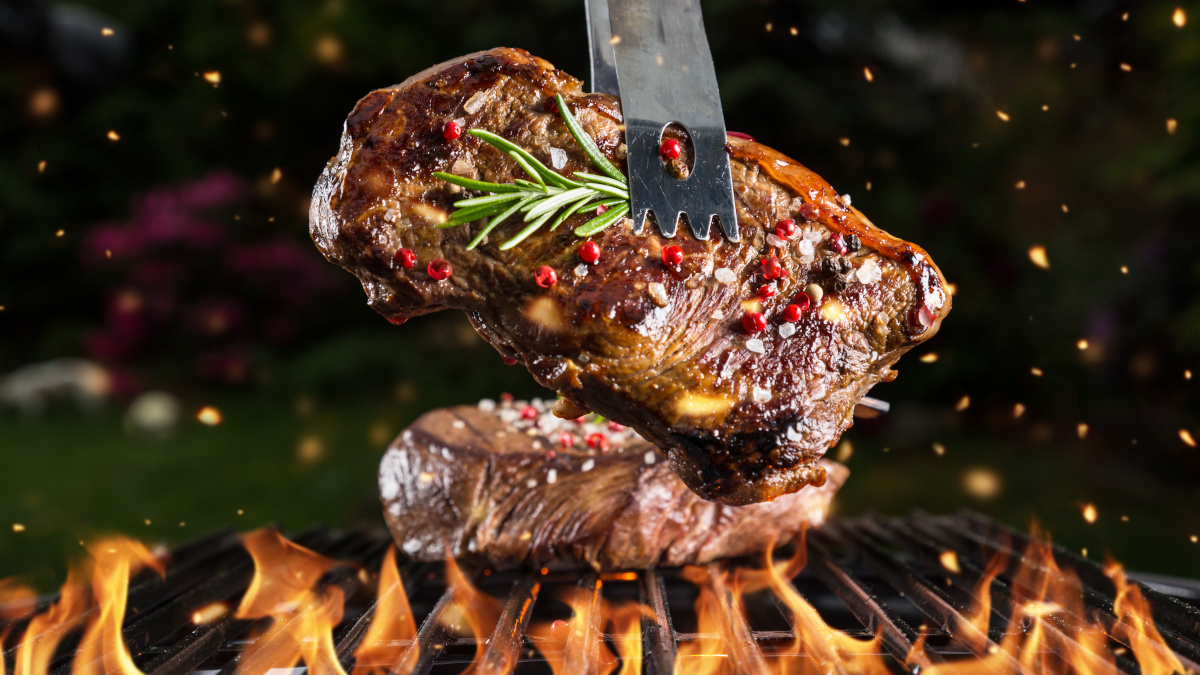
Barbecuing meat: what exactly is the problem?
The main reason nutrition experts are less than enthusiastic about barbecues is that they generate compounds which are potentially damaging to health.
To start with, the process of barbecuing meat leads to the formation of advanced glycation end-products (AGEs), or Maillard reaction products. This occurs when sugars bind to proteins (the famous Maillard reaction), and the resulting AGEs are believed to accelerate the rate at which we age(1). Though AGEs are produced naturally by the body, certain foods can boost their numbers, the biggest dietary sources being animal products cooked at a high temperature (2). And the worst culprit of all is fried bacon!
Barbecuing meat also triggers the release of chemicals called heterocyclic amines (HCAs). When the cooking temperature exceeds 100ᵒC, creatine, a protein in meat, reacts with Maillard products. This leads to very high concentrations of water-soluble HCAs in meat exudates and juices.
At temperatures above 200°C, the problem is made worse by the addition of other types of HCA formed from the breakdown of amino acids. These HCAs are found in the grilled or charred parts – which, let’s face it, are what gives barbecued meat all its flavour. But however much our tastebuds might object, these substances have been classified by the International Agency for Research on Cancer (IARC) as “probable carcinogens” (3).
There’s another three-letter acronym to be aware of when discussing barbecued meat: PAHs (polycyclic aromatic hydrocarbons). Also considered carcinogenic, these compounds form in meat heated to a high temperature (4-6), and to make matters worse, they’re also produced by incomplete combustion of wood and charcoal. A full house then, when it comes to taking the shine off any barbecue plans …
Does this mean we have to banish our barbecues to the back of the shed? Not at all. As long as we don’t overdo it, the barbecue can still be a sociable eating occasion to be enjoyed guilt-free, provided we adopt some sensible measures!
Opt for a vertical barbecue
When you use a horizontal barbecue, meat juices will inevitably drip onto the heat source, increasing the amount of smoke and formation of PAHs. This doesn’t happen with an electric vertical grill!
But if you want to keep your existing barbecue, make sure you place your meat 10 cm away from the coals to maintain an adequate distance from the fire. It’s also better to cook over glowing embers rather than open flames.
Handle the meat carefully
Do you usually prick sausages? When barbecuing, it’s best not to, to minimise the amount of meat juices dripping onto the coals.
Similarly, avoid using meat forks and skewering utensils, and instead use tongs or spatulas to carefully move the meat around. Turning the meat frequently may also reduce HCA formation.
Choose lean cuts and healthy ‘sides’
To minimise intake of lipids and fat dripping onto coals, choose lean meats: chicken fillet strips, turkey brochettes, top sirloin steak … If you’re a lover of entrecote (or ribeye), trim as much fat off it as possible before cooking. Thinner pieces of meat are also a good choice as they can be seared quickly, significantly reducing the amount of heat exposure.
To accompany your meat feast, swap those fries for barbecued vegetables. Adding courgettes, peppers, aubergines and mushrooms to your meat-based meal will go a long way to improving its nutritional profile (7). There’s no excuse – interspersed between two pieces of meat on a skewer, you’ll hardly know they’re there!
Marinade your meat for healthy and delicious results
Marinades not only add flavour and tenderise the meat, but with their many beneficial compounds, they also reduce the formation of harmful substances (especially HCAs) (8). So make liberal use of olive oil, lemon juice, garlic, onions and aromatic herbs for a decidedly healthier barbecue experience!
Ditch the meat juices and charred parts
Granted, this is not what you want to hear. But these are the real ‘villains’ of the barbecue. The meat juices and dark charred marks on barbecued meat contain a large proportion of the HCAs and PAHs produced. Despite their moreish flavour, you need to discard them!
For the same reason, make sure you clean your barbecue grill thoroughly after each use (9).
Take natural substances to help counter any barbecue health risks
What if Nature could help make our barbecues healthier? Some people aware of harmful glycation processes choose to take specific natural substances such as:
- carnosine, a protective peptide produced during digestion of protein-rich ingredients (it features in the supplement Carnosine, or in a derivative form in Carcinine, with a longer survival time in the body) (10) ;
- extract of yerba mate (Ilex paraguariensis), a South American plant and the source of the well-known Yerba Mate tea (11) ;
References
- Sharma C, Kaur A, Thind SS, Singh B, Raina S. Advanced glycation End-products (AGEs): an emerging concern for processed food industries. J Food Sci Technol. 2015;52(12):7561-7576. doi:10.1007/s13197-015-1851-y
- Uribarri J, Woodruff S, Goodman S, et al. Advanced glycation end products in foods and a practical guide to their reduction in the diet. J Am Diet Assoc. 2010;110(6):911-16.e12. doi:10.1016/j.jada.2010.03.018
- Turesky RJ. Formation and biochemistry of carcinogenic heterocyclic aromatic amines in cooked meats. Toxicol Lett. 2007 Feb 5;168(3):219-27. doi: 10.1016/j.toxlet.2006.10.018. Epub 2006 Nov 16. PMID: 17174486.
- Moorthy B, Chu C, Carlin DJ. Polycyclic aromatic hydrocarbons: from metabolism to lung cancer. Toxicol Sci. 2015;145(1):5-15. doi:10.1093/toxsci/kfv040
- Lee JG, Kim SY, Moon JS, Kim SH, Kang DH, Yoon HJ. Effects of grilling procedures on levels of polycyclic aromatic hydrocarbons in grilled meats. Food Chem. 2016 May 15;199:632-8. doi: 10.1016/j.foodchem.2015.12.017. Epub 2015 Dec 8. PMID: 26776018.
- Viegas O, Novo P, Pinto E, Pinho O, Ferreira IM. Effect of charcoal types and grilling conditions on formation of heterocyclic aromatic amines (HAs) and polycyclic aromatic hydrocarbons (PAHs) in grilled muscle foods. Food Chem Toxicol. 2012 Jun;50(6):2128-34. doi: 10.1016/j.fct.2012.03.051. Epub 2012 Mar 20. PMID: 22459130.
- Block G, Patterson B, Subar A. Fruit, vegetables, and cancer prevention: a review of the epidemiological evidence. Nutr Cancer. 1992;18(1):1-29. doi: 10.1080/01635589209514201. PMID: 1408943.
- Salmon CP, Knize MG, Felton JS. Effects of marinating on heterocyclic amine carcinogen formation in grilled chicken. Food Chem Toxicol. 1997 May;35(5):433-41. doi: 10.1016/s0278-6915(97)00020-3. PMID: 9216741.
- Iko Afé OH, Douny C, Kpoclou YE, Igout A, Mahillon J, Anihouvi V, Hounhouigan DJ, Scippo ML. Insight about methods used for polycyclic aromatic hydrocarbons reduction in smoked or grilled fishery and meat products for future re-engineering: A systematic review. Food Chem Toxicol. 2020 Jul;141:111372. doi: 10.1016/j.fct.2020.111372. Epub 2020 Apr 22. PMID: 32334111.
- Ghodsi R, Kheirouri S. Carnosine and advanced glycation end products: a systematic review. Amino Acids. 2018 Sep;50(9):1177-1186. doi: 10.1007/s00726-018-2592-9. Epub 2018 Jun 1. PMID: 29858687.
- Lunceford N, Gugliucci A. Ilex paraguariensis extracts inhibit AGE formation more efficiently than green tea. 2005 Jul;76(5):419-27. doi: 10.1016/j.fitote.2005.03.021. PMID: 15894431.
- Voziyan PA, Hudson BG. Pyridoxamine as a multifunctional pharmaceutical: targeting pathogenic glycation and oxidative damage. Cell Mol Life Sci. 2005 Aug;62(15):1671-81. doi: 10.1007/s00018-005-5082-7. PMID: 15905958.
Keywords




4 Days
Found exactly what I was looking for…
Found exactly what I was looking for already made my first batch of yogurts all is working great! Shipping email notices letting me know tracking number, etc. all around a good deal
CROCKER John
4 Days
Good products and fair prices.
Good products and fair prices.
John Devere
10 Days
Excellent products.
Excellent products. Fast delivery and good customer’s service
BUISSON Laurence
14 Days
Very good product and fabulous service.
Very good product and fabulous service.
LUGO Luz
19 Days
Exceed expectations
Exceed expectations
GEORGE Verne
22 Days
Excellent product
Excellent product , exceptionally efficient process and no pushy sales . Transparency of product origin ,ingredients, quality & description evidence based . Information. User friendly website . easy membership , onboarding & off . EXCELLENT Prices no gimmicks Fast delivery & correct . So glad I found this company .
BEAVERS SANCHEZ Tencia
25 Days
Customer service is excellent.
Customer service is excellent.
Jill
26 Days
Product is wonderful
Product is wonderful. Praise The Lord!
DMHoge
29 Days
You guys have very good quality products
You guys have very good quality products
Mariano Castillo
30 Days
Awesome company.
Very fast shipping, great prices and excellent products.
Susan
33 Days
Best price and quantity of product
Best price and quantity of product Slow delivery though in age of Amazon, but understand cost of service.
CAMPBELL Clayton
34 Days
Exceed
Exceed expectations
GEORGE Verne
42 Days
Clean ingredients
Clean ingredients
chris bentley
45 Days
Above and Beyond!
Above and Beyond!
DOMINIC
57 Days
They get the product to me quickly.
They get the product to me quickly.
GORMLEY Rebecca